
Flame Out
Flame Out
Flame Out
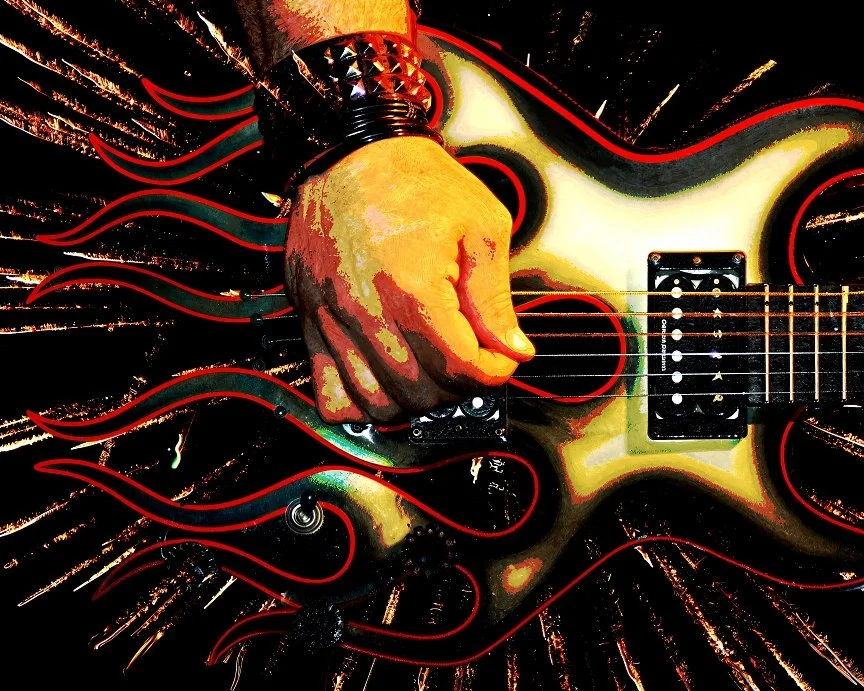
At first the bursts behind the guitar look like fireworks.
But they can also be something else.
Light.
Energy entering the scene the way sunlight enters the world every morning, bringing life to everything it touches.
The guitar itself is not alive.
It is a machine.
Wood, metal, pickups, switches.
A precise device built to translate vibration into sound.
But the moment the hand strikes the strings, something changes.
The instrument begins to react.
Red shapes erupt from behind the guitar. At first they read like flames, but look longer and they begin to move like something organic — curling, reaching, coiling like the tentacles of a squid or octopus.
They are not decoration.
They are force.
The tentacles push against the darkness behind the instrument, contracting like living muscle, driving the guitar forward.
Across the page.
And toward the edge of the picture.
Part machine.
Part organism.
The sunlight brings the energy.
The human touch releases it.
The guitar becomes the place where it comes alive.
For a moment the instrument is no longer just an object in a picture.
It is a creature of sound.
And the tentacles shove it forward until it can no longer be contained by the frame.
It flames out —
right off the paper.